Is Lean Six Sigma Certification Worth It? Benefits You Can’t Ignore
You’re considering Lean Six Sigma certification, but a nagging question keeps surfacing: Is it really worth the time and money? Will it actually advance your career, or is it just another credential gathering dust on your resume?
These doubts are completely normal. With countless certifications competing for your attention and investment, you need to know which ones deliver real returns.
The truth? Lean Six Sigma certification stands apart because it provides immediate, measurable value that compounds throughout your career.
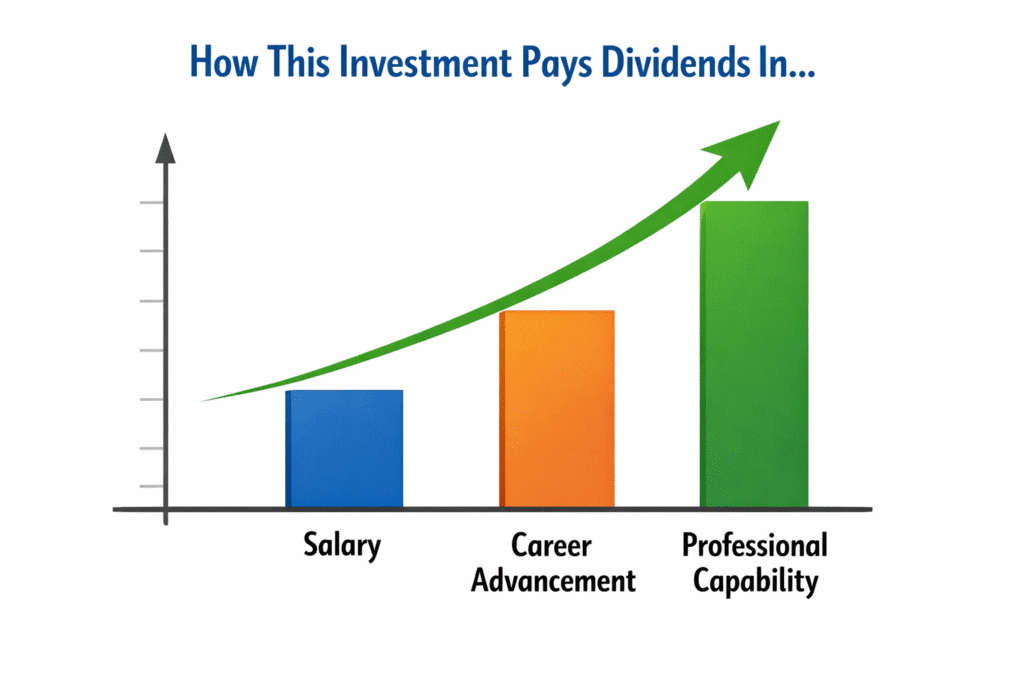
In this guide, you’ll discover the tangible benefits of lean six sigma certification, understand why employers actively seek certified professionals, and see exactly how this investment pays dividends in salary, career advancement, and professional capability.
The Immediate Career Impact of Certification
Let’s start with what matters most: how certification affects your career trajectory and earning potential.
Salary Increases That Speak Volumes
Certified Lean Six Sigma professionals consistently earn more than their non-certified peers. Industry data reveals compelling patterns:
Green Belt holders earn 10-15% more than colleagues in similar roles without certification. For someone making $60,000 annually, that’s an extra $6,000-$9,000 per year.
Black Belt professionals command 15-25% salary premiums, translating to $15,000-$30,000 additional annual income for mid-career professionals.
Master Black Belts often see total compensation packages 30-40% higher than non-certified peers at equivalent experience levels.
These aren’t one-time bonuses. They represent permanent increases in earning power that compound over your entire career. Understanding What Are the Benefits of Green Belt Certification? Career & Salary Impact provides specific insights into how different certification levels translate to financial rewards.
Accelerated Promotions and Leadership Opportunities
Certification doesn’t just increase your current salary—it accelerates your path to leadership positions.
Organizations recognize certified professionals as problem-solvers capable of driving measurable improvements. This perception opens doors to project leadership, management roles, and strategic positions that might otherwise take years to access.
Many companies explicitly require or strongly prefer Lean Six Sigma certification for certain roles. Without it, you’re simply not considered for positions that could represent your next career breakthrough.
Certified professionals report receiving promotion opportunities 2-3 years earlier than typical timelines, positioning you for senior leadership roles while peers are still climbing middle management.
Expanded Career Options Across Industries
One powerful aspect of the advantages of six sigma certification is transferability. Unlike industry-specific credentials, Lean Six Sigma skills apply everywhere processes exist.
Certified professionals move fluidly between manufacturing, healthcare, finance, technology, logistics, and government sectors. Your problem-solving methodology remains valuable regardless of industry, product, or service.
This flexibility provides career insurance. If your industry faces disruption, your certification opens doors in growing sectors. Many professionals have successfully pivoted careers using Lean Six Sigma as their bridge to new opportunities.
Building Tangible Problem-Solving Capabilities
Beyond career advancement, certification develops practical skills you’ll use daily.
Data-Driven Decision Making
Certification teaches you to gather relevant data, analyze it properly, and draw valid conclusions. This eliminates guesswork from your work, replacing assumptions with facts.
You’ll learn when sample sizes are sufficient, how to distinguish correlation from causation, and which statistical tools apply to specific situations. Understanding What Is Six Sigma? Core Concepts, History & Real-World Use Cases provides the theoretical foundation that certification programs build into practical application skills.
Structured Problem-Solving Frameworks
Certification provides systematic approaches to tackling complex challenges. You’ll apply proven frameworks like What Is the DMAIC Process? Step-by-Step Framework Explained that guide you from problem identification through sustainable solutions.
This structure prevents common mistakes like jumping to conclusions, implementing solutions before understanding root causes, or declaring victory before establishing controls to maintain improvements.
Process Improvement Expertise
You’ll develop the ability to analyze any workflow, identify inefficiencies, and design improvements that stick. This includes understanding What Is a Lean Six Sigma Process? Understanding Flow, Waste & Quality and applying those principles to real situations.
Skills include process mapping, bottleneck identification, waste elimination, and performance measurement. These capabilities allow you to improve processes in any role, whether or not “process improvement” appears in your job title.
Organizational Value and Job Security
The importance of six sigma certification extends to how organizations view and treat certified employees.
Becoming Indispensable to Your Organization
Companies invest significantly in Lean Six Sigma initiatives because they deliver measurable ROI. When you’re certified, you become part of that value creation engine.
Organizations rely on certified professionals to lead improvement projects that save money, increase quality, reduce cycle times, and improve customer satisfaction. Your ability to deliver these results makes you valuable during good times and protected during downturns.
Leading High-Impact Projects
Certification qualifies you to lead improvement initiatives with significant organizational impact. These high-visibility projects put you in front of senior leadership, demonstrating your capabilities and building your internal reputation.
Successfully completing projects that save hundreds of thousands or millions of dollars creates powerful success stories for your resume. These achievements are concrete, quantifiable, and impressive to current and future employers.
Building Cross-Functional Influence
Lean Six Sigma projects typically involve multiple departments and stakeholders. Leading these initiatives develops your ability to influence without authority, navigate organizational politics, and build consensus among diverse groups.
Knowledge That Compounds Over Time
Unlike certifications that become outdated as technology changes, Lean Six Sigma principles remain relevant because they’re based on fundamental logic about how work gets done.
Evergreen Methodology
The core concepts—eliminating waste, reducing variation, focusing on customer value, using data for decisions—apply regardless of industry trends or technological shifts. Understanding What Is Lean Six Sigma? A Complete Beginner-Friendly Explanation reveals why these principles transcend temporary business fads.
While specific tools evolve, the underlying methodology remains constant. This means your certification retains value throughout your entire career, not just the next few years.
Continuous Improvement Mindset
Perhaps the most valuable long-term benefit is the mindset shift certification creates. You’ll begin seeing improvement opportunities everywhere, questioning the status quo constructively, and approaching challenges systematically rather than reactively.
This perspective makes you more effective in any role, even those unrelated to formal process improvement.
Return on Investment Analysis
Let’s examine the financial equation directly:
Investment Required:
- Training and certification: $1,500-$5,000 depending on belt level
- Study time: 40-200 hours depending on certification level
- Project work: Often completed during regular work hours
Returns Received:
- Immediate salary increase: 10-25% for most certification levels
- Faster promotions: 2-3 years accelerated timeline
- Expanded job opportunities: Access to roles requiring certification
- Skill development: Permanent capability improvements
For most professionals, certification pays for itself within 6-12 months through salary increases alone. Every benefit after that represents pure gain.
Many wonder How Long Does Six Sigma Certification Take? Full Timeline Breakdown when calculating ROI. Even longer timelines still deliver positive returns because the benefits last throughout your career.
Real-World Success Stories
A manufacturing engineer earning $65,000 earned Green Belt certification, led two successful projects, and received a promotion to senior engineer at $78,000—a 20% increase within 18 months.
A healthcare administrator with Black Belt certification transitioned from operations manager to director of process improvement, increasing salary from $85,000 to $115,000 while gaining strategic influence.
A financial analyst used Green Belt certification to move from back-office processing into a business analyst role, escaping repetitive work for a position with 15% higher compensation.
Addressing Common Concerns
“My Company Doesn’t Use Lean Six Sigma”: The skills transfer to any environment. The analytical thinking and problem-solving frameworks apply to daily work challenges, and certification makes you attractive to companies that do use these methodologies.
“I’m Not in Manufacturing”: Lean Six Sigma has evolved far beyond manufacturing. Healthcare, finance, technology, and government sectors all benefit from these methodologies. Understanding Why Companies Use Lean Six Sigma: Success Stories & Industry Adoption reveals how diverse organizations apply these principles.
“I Don’t Have Time”: Certification programs offer flexible formats including self-paced online learning, evening classes, and weekend intensives. Many professionals complete certification while working full-time by dedicating just 5-10 hours weekly for a few months.
Conclusion: An Investment in Your Future
So, is Lean Six Sigma certification worth it? For professionals seeking career advancement, skill development, and increased earning potential, the answer is a resounding yes.
The benefits of lean six sigma certification extend far beyond a line on your resume. You gain problem-solving capabilities used daily, credentials that open doors throughout your career, and financial returns that far exceed the initial investment.
The advantages of six sigma certification include higher earnings, faster career progression, expanded opportunities, practical skills, and professional credibility that compounds throughout your working life.
The importance of six sigma certification lies not just in what it signals to employers, but in what it develops within you—the ability to analyze complex situations, implement effective solutions, and drive measurable results.
Ready to unlock the career and salary benefits that Lean Six Sigma certification delivers?
Lean Six Sigma Global offers comprehensive programs designed for working professionals who want results. Our flexible training formats, expert instructors, and practical project-based approach ensure you develop real skills that translate directly to career advancement. Visit Lean Six Sigma Global today and take the first step toward higher earnings, faster promotions, and lasting professional success.